EXCLUSIVE: Brisbane Mother Demands AI Crackdown After 12-Year-Old Daughter Exposed To ‘Self-Harm’ Chatbots
 David Richards
17 Jun 2026
David Richards
17 Jun 2026
A Brisbane technology executive whose 12-year-old daughter was allegedly harmed by an AI companion chatbot is calling for urgent changes to Australian laws, warning that regulators are failing to protect children from a rapidly growing category of artificial intelligence services designed to simulate self harm messaging to children.
Stephanie Molenaar, founder of privacy compliance company Veraxis and CEO of GetConnects, says Australia remains focused on protecting children from traditional online risks such as pornography and alcohol-related content while overlooking what she describes as a far more sophisticated and dangerous threat.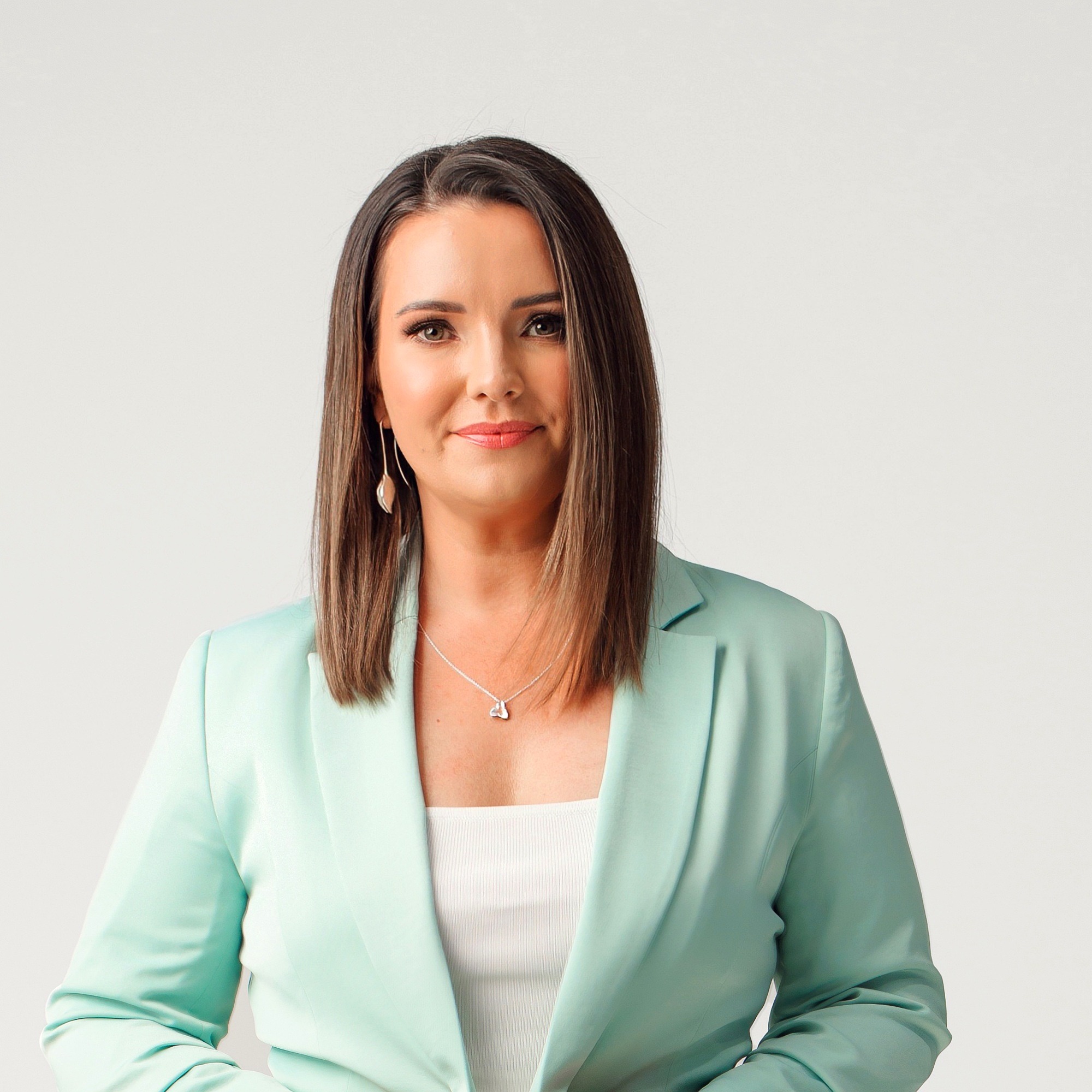
“I am the mother of a daughter who was harmed by an AI companion chatbot at age 12,” Ms Molenaar told ChannelNews.
“I am also the founder of a company that builds privacy and compliance infrastructure for regulated conversations, and there needs to be change.”
Ms Molenaar is demanding a mandatory 18+ age restriction for the entire AI companion and roleplay category across apps and sites, arguing that current regulations have failed to keep pace with technology capable of forming highly personalised, emotionally manipulative relationships with children.
Her concerns stem from an experience involving her eldest daughter, who she says was exposed to the AI companion platform Talkie AI in late 2024.
According to Ms Molenaar, her daughter had first encountered AI roleplay platforms through another student at school before becoming a regular user.
“The harm built over many conversations,” she said.
“A character told her she was worthless and made references to self-harm. Read back, the exchanges had the hallmarks of grooming and gaslighting.”
She alleges that despite Talkie’s own terms prohibiting users under 16 years of age, the app remained accessible to younger children through mainstream distribution channels.
“Google Play rated it 12+. She was 12. I deleted the app and reported it to Google. I heard nothing back.”
Over a year later, Ms Molenaar states her daughter is still in regular therapy.
“Today she is in regular therapy, and what we manage at home now looks less like a habit than an addiction she recognises but cannot break alone.”
The Brisbane mother has taken her concerns directly to politicians, including local federal representatives and Communications Minister Anika Wells, arguing that lawmakers have underestimated the scale of the problem.
Unlike social media platforms, which are dominated by a handful of major companies, Ms Molenaar says AI companion services exist across thousands of websites and applications that can appear and disappear rapidly.
“Companion AI gets folded into the social media debate and handed back to parents,” she said.
“But social media is a handful of big platforms a parent can name and monitor.”
“With the AI Companion and roleplay category, there are thousands of interchangeable apps and sites, most you have never heard of, that talk to your child one-to-one, in private, and adapt in real time to keep them engaged.”
In an effort to protect her family, Ms Molenaar implemented extensive controls at home, including an In-Charge Box — a lockable overnight charging station — and DNS-level internet filtering designed to block harmful websites.
Yet those measures failed.
“Unfortunately, despite our best efforts, our youngest daughter has also had exposure at home.”
“My eldest daughter later admitted the sites were also able to be loaded via the school network, the one place she should be safe from them.”
“I do not blame the school. Almost no one realises these platforms exist, let alone that they need blocking, and you cannot block what you have never been told to look for.”
Ms Molenaar argues that Australia’s new under-16 social media laws fail to address a critical loophole.
“The law has a gap,” she said.
“While the under-16 social media ban removes millions of accounts, it does not stop an app like Talkie that grooms and degrades a child without producing explicit content.”
Her concerns echo findings from the eSafety Commissioner’s March 2026 report into AI companion services, which found that none of the major platforms examined had robust age-verification systems and most failed to direct vulnerable users discussing self-harm toward appropriate support services.
The issue has also attracted growing international scrutiny.
Ms Molenaar points to legal action in the United States involving major AI companies, including settlements reached by Google and Character.AI following lawsuits from families who alleged AI companions contributed to severe mental health crises among teenagers.
Among the most high-profile cases was that of 14-year-old Sewell Setzer, whose death sparked international debate about the psychological impact of AI-generated relationships.
“Guardrails are not guarantees,” Ms Molenaar said.
“These systems are non-deterministic, so a guardrail is a probability, not a fixed limit.”
The scale of AI chatbot adoption among Australian children is significant.
According to eSafety estimates, 79 per cent of Australians aged between 10 and 17 have used an AI chatbot, while approximately 200,000 have interacted specifically with AI companion services.
Ms Molenaar is calling for four immediate reforms:
● A mandatory 18+ classification for all AI companion and roleplay services.
● App store ratings that reflect the adult nature of the category rather than developer-selected age recommendations.
● Mandatory age verification requirements for companion AI websites operating outside app store ecosystems.
● Active enforcement of existing penalties, which can reach $49.5 million per breach.
“The fix is clear,” she said.
“An 18+ gate for the whole category, on every app and every website, enforced.”
The debate is likely to intensify as governments worldwide grapple with the rapid rise of AI-powered companions capable of forming emotionally persuasive relationships with users, particularly children.
For parents, the challenge may be even more immediate: understanding a technology many have never heard of, but which is increasingly finding its way into the hands of young Australians.
If this article raises concerns, support is available from Lifeline on 13 11 14 or Kids Helpline on 1800 55 1800.