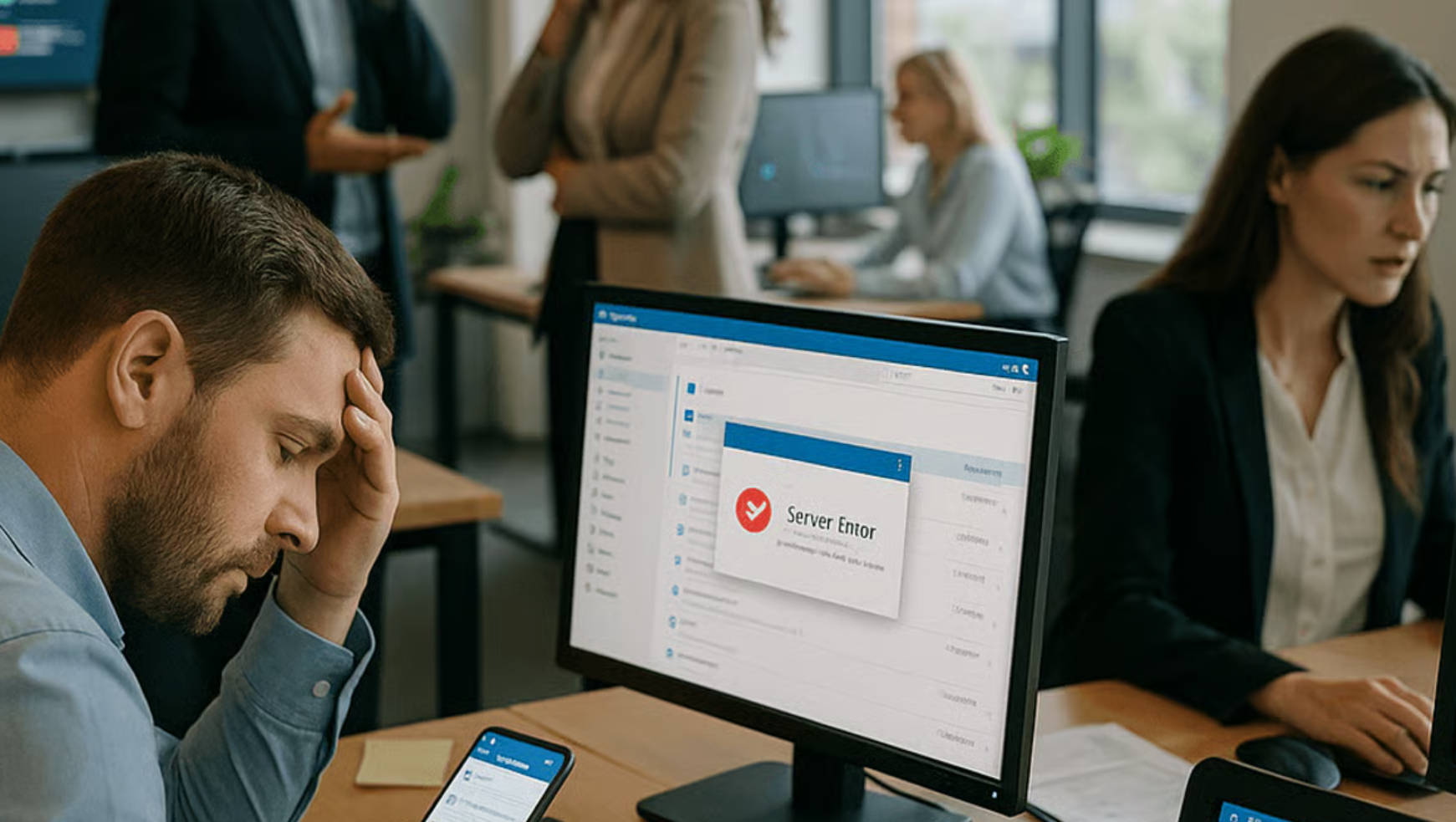
OPINION: The Federal Government Was Warned About Microsoft Dependency, So Where The Independent Safeguards When One Company Crashed Australia Last Week?
 David Richards
15 Nov 2026
Perhaps the most disturbing aspect of the Microsoft outage is that the Australian Federal Government had already been warned about the dangers of concentrating critical government technology in the hands of a small number of foreign suppliers.
This was not an unforeseen risk.
Also missing in action was Jane Livesey the President and Managing Director for Microsoft Australia and New Zealand (ANZ). She appear to be hiding beind the PR model adopted by Optus CEO Kelly Beyer who we all know got sacked when she failed to front the cameras as the Optus network outage was unfolding.
Instread of assuring affected Australians she left it to Microsoft spin doctors to try and minimise the fallout which could see the Company sued for billions in losses.

Jane Livesey the President and Managing Director for Microsoft Australia
In February 2026, an independent review commissioned by the Digital Transformation Agency identified the potentially catastrophic consequences of a major technology supplier failure.
The review warned about the difficulties government agencies would face trying to move critical services away from a dominant supplier.
Despite identifying those risks, the review supported retaining whole-of-government single-seller arrangements.
But having policies and conducting reviews is not the same as demonstrating that independent backup systems exist and can keep essential government operations running during a major supplier failure.
And this is where serious questions remain unanswered.
Why has the Federal Government not publicly demonstrated that essential government agencies can continue operating independently of Microsoft when its systems fail?
Where are the alternative email, communications and collaboration platforms?
How many government departments have tested their ability to operate for 24 or 48 hours without Microsoft 365?
What guarantees have taxpayers received in return for billions of dollars in technology contracts?
And who is accountable when a technology failure interrupts essential government services?
It appears to not be the Anthony Albanese Government or Jane Livesey the President and Managing Director for Microsoft Australia, both who appear to have been more interested in other things that addressing how Australian business and Government departments were nobbled by one Companies failures.
The Australian Computer Society has been calling for a national review of sovereign technology risk since January.
Following the November outage, it renewed that demand, pointing out that the review had still not commenced.
This is particularly significant because Australia’s national security officials had also warned about the dangers of excessive dependence on Microsoft.
In August, senior Home Affairs official Hamish Hansford warned that an outage affecting a major technology supplier could have a disproportionate impact on Australia.
Yet the Government continued relying heavily on Microsoft technology.
In June, Home Affairs Minister Tony Burke announced a new partnership with Microsoft aimed at strengthening Australia’s digital resilience.
When the November outage occurred, Burke said provisions of that agreement had been activated to prioritise Australia’s recovery.
The Government had also conducted a cybersecurity resilience exercise involving Microsoft shortly before the failure.
These are genuine actions, but they raise a much bigger question.
Why is Australia’s response to a major Microsoft failure so dependent on Microsoft itself?
A partnership with the supplier may help accelerate recovery. It does not, by itself, provide an independent alternative when the supplier’s systems stop working.
Nor does a recovery agreement demonstrate that critical government services can continue operating without that supplier.
Australia’s Federal Government should be able to show that essential services have independently tested contingency arrangements, that agencies can communicate outside the Microsoft ecosystem, and that critical public functions can survive an extended outage.
Instead, Australians have been offered assurances about recovery, cybersecurity cooperation and the absence of malicious activity.
Those assurances are important, but they are not a substitute for evidence of operational resilience.
Other countries are already taking more direct action to reduce technology concentration.
France is moving parts of its government technology environment towards European and open-source alternatives, while Germany’s Schleswig-Holstein has migrated tens of thousands of government mailboxes away from Microsoft products.
The Albanese Government need to explain why its own approach provides an equivalent level of protection.
The Federal Government has demonstrated that it can negotiate major contracts, establish partnerships and conduct reviews but not protect their own Government departments and Australian businesses from becoming subserviant to Microsoft.
What it has yet to demonstrate publicly is that Australia can keep essential government operations running when Microsoft cannot.
Until that evidence is provided, the central question remains unanswered: are taxpayers purchasing genuine resilience, or simply paying billions to become increasingly dependent on a single foreign technology supplier?