Trump Offers 100% Chip Tariff Relief for Companies Investing in U.S.
 Isabella Alexiou
07 Aug 2025
Isabella Alexiou
07 Aug 2025
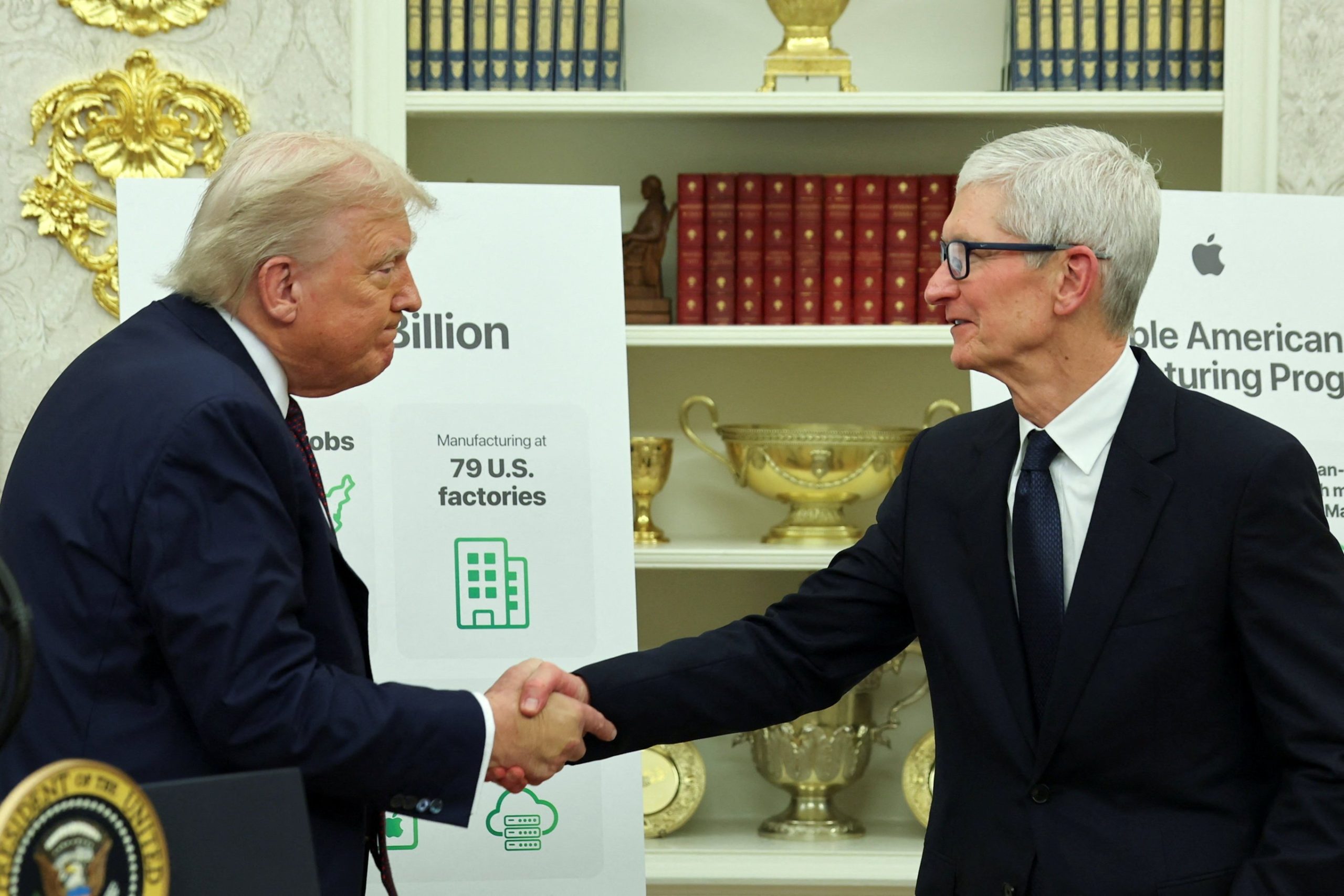
President Trump announced he would impose approximately 100% tariffs on all semiconductor imports while exempting technology companies that commit to domestic manufacturing, providing relief for Apple and other electronics firms concerned about trade disruptions.
The exemption announcement came during a White House event highlighting Apple’s new $153 billion investment pledge.
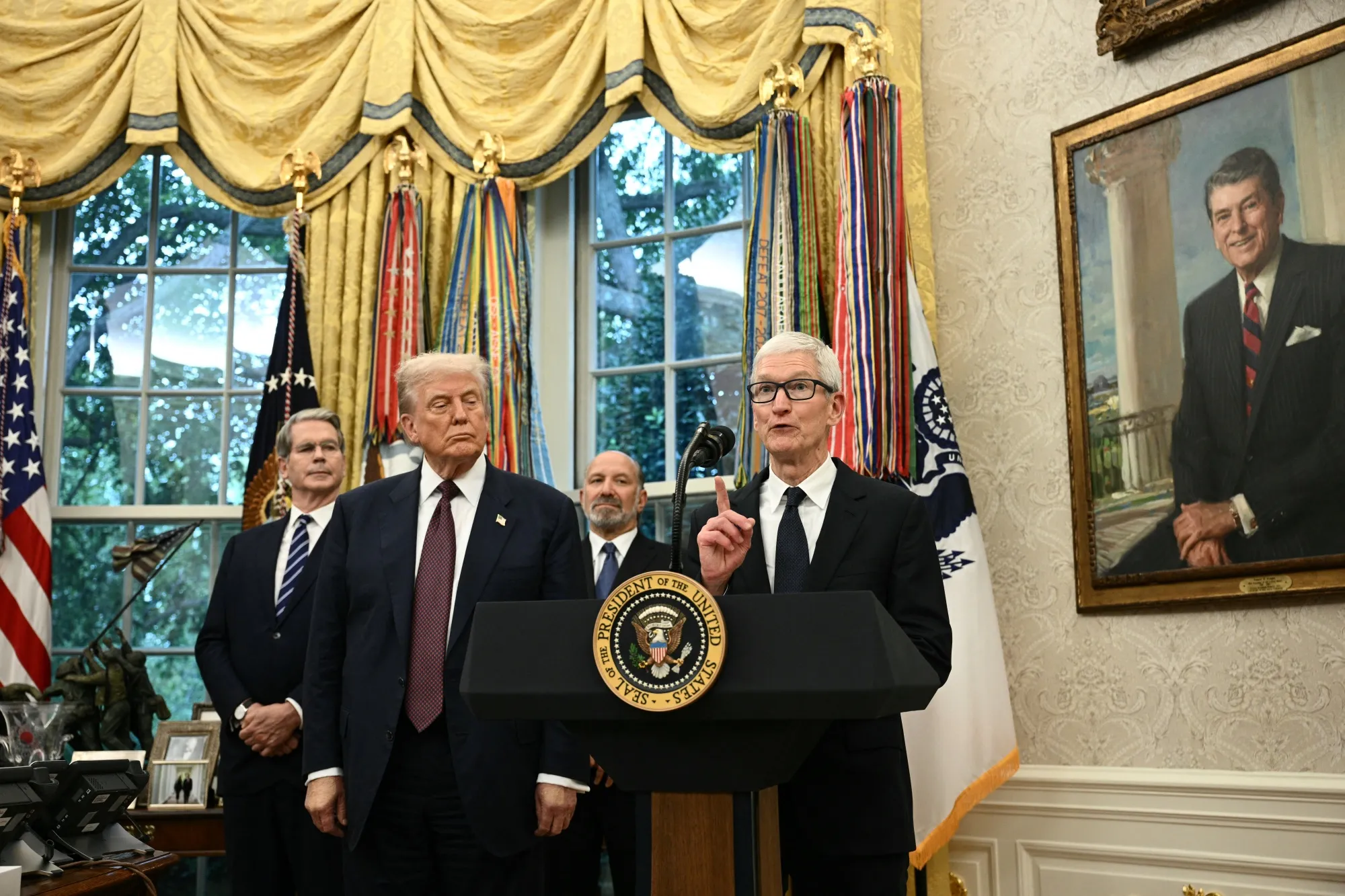
Apple CEO Tim Cook presented Trump with a specially designed glass plaque, stating that iPhone and Apple Watch glass will soon be manufactured in Kentucky by Corning as part of a $3.8 billion investment.
Trump’s “pay-to-invest” approach formalises arrangements many executives already understood, as nearly every major technology company has promised increased U.S. operations.
Over $3 trillion in new pledges have emerged in the past seven months from tech companies seeking to avoid punitive tariffs.
“If you’re building, there will be no charge,” Trump stated, outlining the criteria for tariff exemptions.
Apple’s latest commitment adds to a $764 billion, four-year pledge made in February that largely repackaged existing U.S. spending plans, according to industry analysts.
The company stated that American manufacturers are producing 19 billion chips for Apple across 24 factories in 12 states.
Apple shares rose 5.1% during trading and gained an additional 3.5% after hours following the tariff exemption news.
Chip manufacturer Taiwan Semiconductor Manufacturing Co. also saw shares increase more than 3%.
Trump also met with Nvidia CEO Jensen Huang, whose company has committed $764 billion in U.S. investments while lobbying for favourable chip export policies.
The meetings reflect the administration’s focus on reshoring critical technology manufacturing.
Industry analysts note that domestic iPhone production remains financially unfeasible, leading Apple to relocate some assembly from China to India while promising component manufacturing in the U.S.
The company continues to invest heavily in supply chains across China, India, and Southeast Asia, where most devices are actually manufactured.
“The market seems to believe that we’re in a pay-to-play world where companies can buy their way into tariff exemptions by making commitments to invest in the U.S., even if those investments fall far short of actually re-shoring manufacturing,” said Craig Moffett, analyst at Moffett Nathanson.
Trump simultaneously announced a 25% tariff increase on India for purchasing Russian oil, raising total U.S. tariffs on Indian exports to 50%.
This development threatens Apple’s strategy of moving iPhone assembly to India to avoid Chinese tariffs, where 20% levies already impact company profits.
The semiconductor tariff exemptions represent a significant policy shift as chipmakers have intensified lobbying efforts in recent weeks, with companies like Micron Technology and Nvidia securing favourable meetings with the administration.