Samsung Goes Early With New Foldable Aimed Squarely At Apple
 David Richards
23 Jul 2026
David Richards
23 Jul 2026

Samsung has fired the opening shot in what is shaping up to be the biggest premium smartphone battle in years, unveiling a radically reshaped foldable range just weeks before Apple is expected to enter the category with its first foldable iPhone.
The South Korean electronics giant chose London, rather than its home market or the United States, for its latest Galaxy Unpacked event, a move widely seen as a calculated attempt to defend its leadership in Europe’s fiercely contested premium smartphone market while positioning itself ahead of Apple’s expected foldable launch later this year.
But despite Samsung’s attempts to tightly control the messaging around the launch, almost every major announcement had already leaked.
If Samsung’s strict non disclosure agreements were designed to stop information getting out, they failed spectacularly. Detailed specifications, pricing, colours and even promotional images had surfaced online days before the event, with the overwhelming majority proving to be accurate.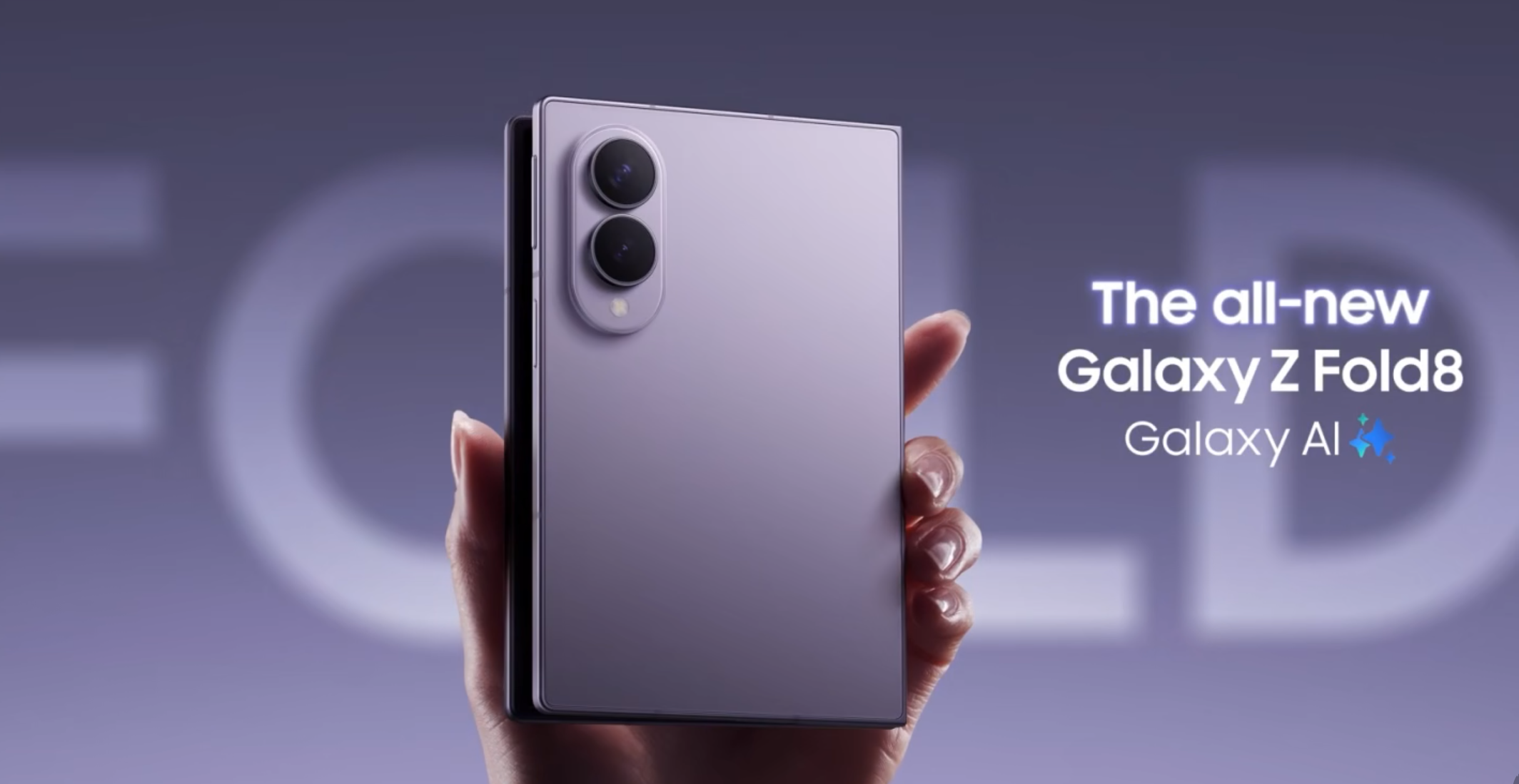
Ironically, Samsung continues to prevent journalists from photographing briefing slides at pre launch events while simultaneously losing control of confidential product information through repeated leaks. The result is a bizarre situation where media are prevented from photographing PowerPoint presentations, yet are expected to rely on carefully managed press releases delivered only hours before the official announcement, long after detailed reports have already appeared worldwide.
Samsung staged its latest Galaxy Unpacked event at London’s Old Billingsgate, the Grade II listed Victorian market hall on the banks of the River Thames, marking the company’s first major UK product launch since the Galaxy S3 was unveiled at Earls Court in 2012.
The choice of London appears deliberate.
Europe has emerged as Samsung’s most competitive premium foldable smartphone market, with Chinese rivals rapidly gaining momentum while Apple prepares to enter a segment Samsung has dominated for years.
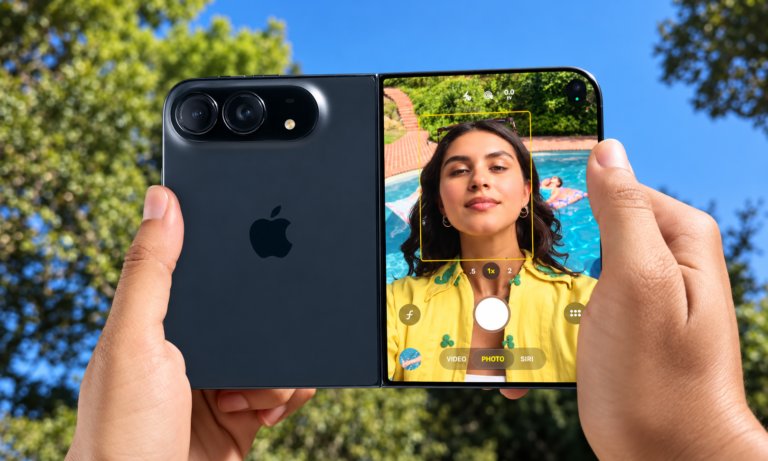
Perhaps more significantly, Samsung appears to have designed one of its new devices with Apple’s plans firmly in mind.
The new Galaxy Z Fold 8 adopts a wide 4:3 display ratio that closely mirrors specifications repeatedly linked to Apple’s first foldable device through supply chain reports. Samsung also enjoys a unique competitive advantage, manufacturing key display and memory components for Apple, potentially giving it valuable insight into the direction of its biggest rival’s hardware strategy.
The move raises questions about whether Samsung is attempting to establish the preferred form factor before Apple officially enters the market.
Alongside the new smartphones Samsung unveiled its Flex Titanium display technology designed to reduce the visible crease in foldable displays, a new generation of agentic AI software, two new Galaxy smartwatches and its first AI powered smart glasses.
The launch also comes as consumers face record smartphone prices.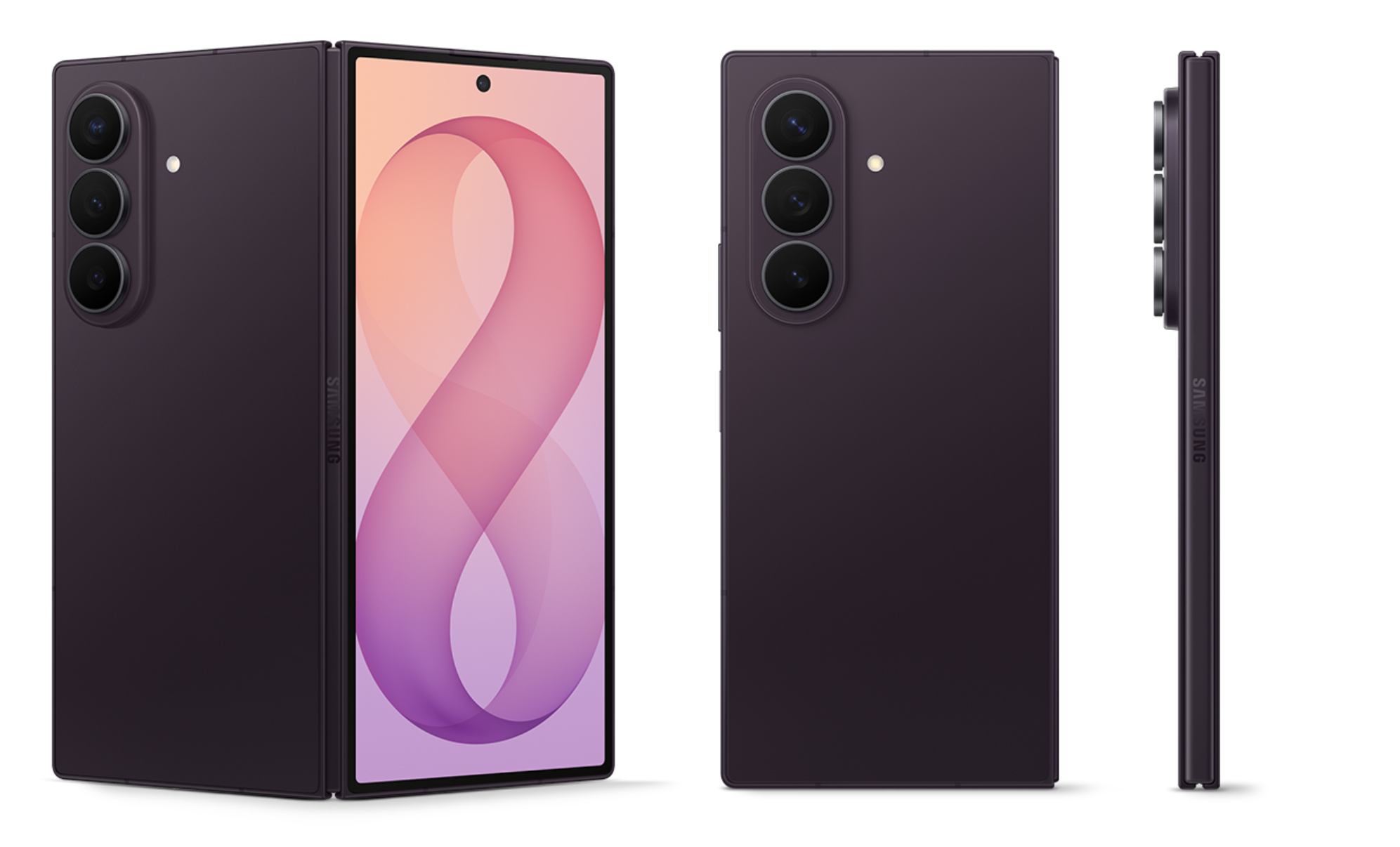
Samsung, one of the world’s largest memory manufacturers, is blaming a global DRAM shortage for pushing foldable smartphone prices higher, despite benefiting directly from higher memory prices through its semiconductor division.
The biggest surprise is the complete reshuffle of Samsung’s foldable range.
Instead of simply replacing last year’s models, Samsung has split its Fold family into two distinct products.
The new Galaxy Z Fold 8 introduces an entirely different design philosophy.
When folded it resembles a passport rather than a conventional smartphone. Open it and the device looks far more like Apple’s iPad mini than previous Samsung foldables.
The 7.6 inch internal display adopts a wider 4:3 aspect ratio designed to improve tablet style productivity while reducing the black bars that appear when watching landscape video content.
The external 5.5 inch display is shorter and noticeably wider than traditional smartphones, creating a more compact design.
Power comes from Qualcomm’s Snapdragon 8 Gen 5 processor paired with 12GB of RAM, storage options up to 1TB, a 4,800mAh battery, a 50 megapixel main camera, a new 50 megapixel ultra wide camera, dual 10 megapixel selfie cameras, an anti reflective display coating and Samsung’s new titanium reinforced hinge structure aimed at significantly reducing the crease that has long plagued foldable displays.
Sitting above it is the new Galaxy Z Fold 8 Ultra, effectively the successor to last year’s Fold 7 despite carrying a different name.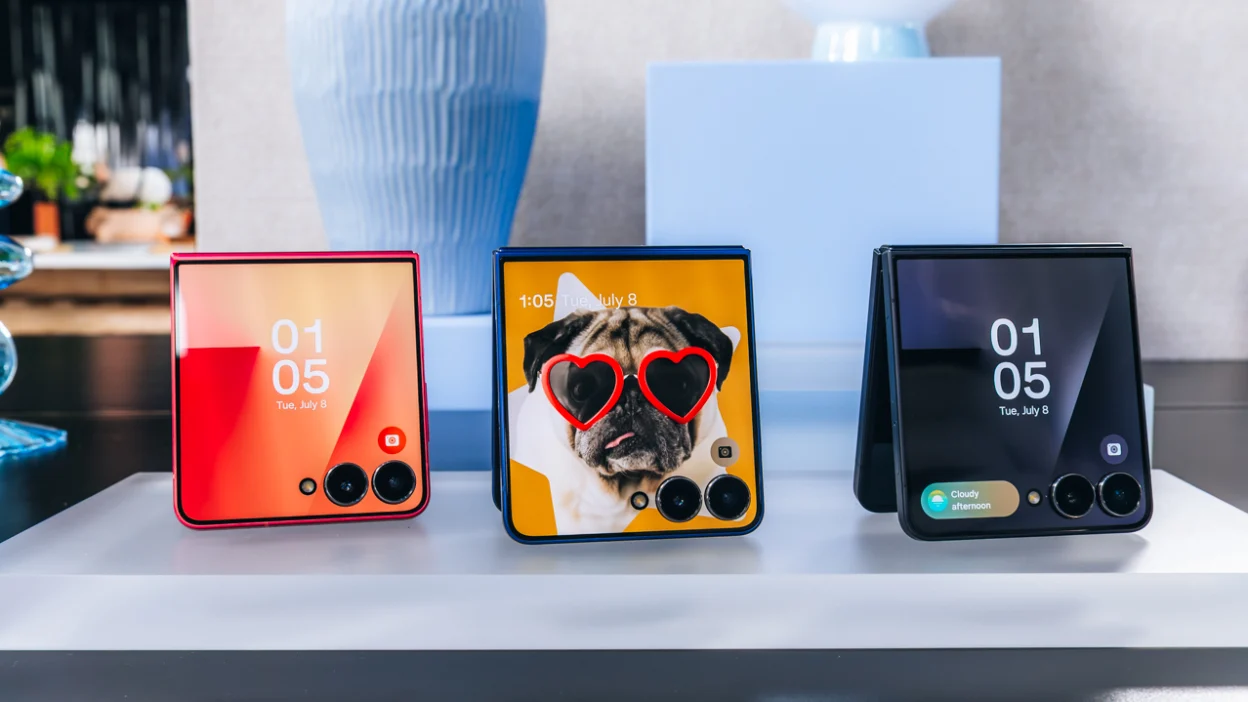
Samsung has retained the familiar tall book style design while reducing thickness to just 4.1mm when unfolded.
The Ultra gains a brighter, higher resolution 8 inch internal display, improved anti reflective coating and a substantially upgraded camera system featuring a 200 megapixel primary sensor, a new 50 megapixel ultra wide camera replacing the previous 12 megapixel sensor, plus a 10 megapixel telephoto camera.
Battery capacity has increased to 5,000mAh, Samsung’s largest ever battery fitted to a foldable smartphone, with the company claiming up to 27 hours of video playback.
The device runs a customised version of Qualcomm’s latest Snapdragon 8 Elite Gen 5 processor.
By comparison, the new Galaxy Z Flip 8 represents only a modest update.
Powered by Samsung’s own Exynos 2600 processor, the device weighs 180 grams, is 6.1mm thick, features a strengthened hinge, updated software for its 4.1 inch external display, a 6.9 inch internal display, IP48 protection and a slightly larger 4,300mAh battery.
Across the range Samsung is continuing its commitment to provide seven years of Android operating system and security updates.
However, industry speculation is already growing that the Flip family may not have a long term future.
Several of Samsung’s most accurate product leakers believe there may not be a Galaxy Z Flip 9 next year, fuelling speculation that Samsung could eventually consolidate its foldable range around larger book style devices if consumer demand shifts in that direction.
Consumers will also notice significantly higher prices.
The Galaxy Z Flip 8 now starts at $1,949 for the 256GB model and $2,249 for the 512GB version.
The Galaxy Z Fold 8 starts at $2,699 for 256GB, rising to $2,999 for 512GB and $3,599 for the 1TB version.
The premium Galaxy Z Fold 8 Ultra starts at $2,999 for 256GB, $3,299 for 512GB and $3,899 for the 1TB model.
Higher storage variants have risen by as much as $350 compared with previous models, while the entry level Fold 8 Ultra is $100 more expensive than its predecessor.
Consumers prepared to shop around will find considerably better value through Australian retailers and carriers than through Samsung itself.
Optus is offering a straightforward $750 discount spread across a 36 month plan.
Telstra, which is still attempting to recover customer confidence following its recent nationwide network outage, has responded with the strongest offers, discounting the Fold 8 Ultra by $800, the Fold 8 by $700 and the Flip 8 by $500, while also including up to $300 in additional trade in credits.
Vodafone is matching the $700 discounts on both Fold models and offering $500 off the Flip together with similar trade in incentives.
Retailers including JB Hi Fi, Harvey Norman and Amazon are also attempting to stimulate demand by including $300 gift cards with outright purchases.
Samsung’s own online offers appear comparatively weak, limited to modest trade in bonuses, accessory vouchers and enhanced Samsung Rewards redemption offers.
Embarrassingly for Samsung, Australian pricing leaked almost a week before launch through what appeared to be an internal Harvey Norman presentation slide that accurately detailed local prices, memory configurations and even Samsung exclusive colours including Pistachio for the Fold 8 and Mint for the Flip 8.
For retailers, the bigger commercial question is whether the new wide format Fold 8 will cannibalise sales of Samsung’s more expensive Fold 8 Ultra, particularly given the $300 price difference, while uncertainty surrounding the long term future of the Flip range could reshape Australia’s clamshell foldable market, a category Samsung has largely dominated for several years.
With Apple now only weeks away from unveiling what many expect will be its first foldable smartphone, Samsung’s biggest challenge may no longer be convincing consumers to buy a foldable device.
It may instead be defending a market it created from competitors that have finally arrived.