Retailers With Big Trade & Business Customers Facing Grim 2024
 David Richards
13 Dec 2023
David Richards
13 Dec 2023

Retailers operating commercial and trade supply businesses, including the likes of Harvey Norman Commercial, who rely on the success of trades and suppliers to the building industry are facing a tough time in 2024 with a flood of tipped business failures set to hurt their operations.
Harvey Norman Commercial whose former NSW business in Taren Point, which is believed to be under investigation by the Australian Federal Police and the Australian Tax Office after the franchisee operator was placed into administration and former staff arrested for theft, is already under pressure due to the collapse of over 2,000 building industry Companies during the past 12 months.
Now a spike in bad loans is set to hit the market with several Companies struggling to pay their last quarter tax bills.
Creditor Watch has warned a large increase in business failures is likely in 2024 as a string of interest rate rises, sticky inflation and a pullback in consumer spending take their toll.
The credit bureau said many businesses are trading at a loss and will struggle to survive in 2024.
Among the retailers set to be hit are Officeworks and Bunnings who have significant trade and business customers.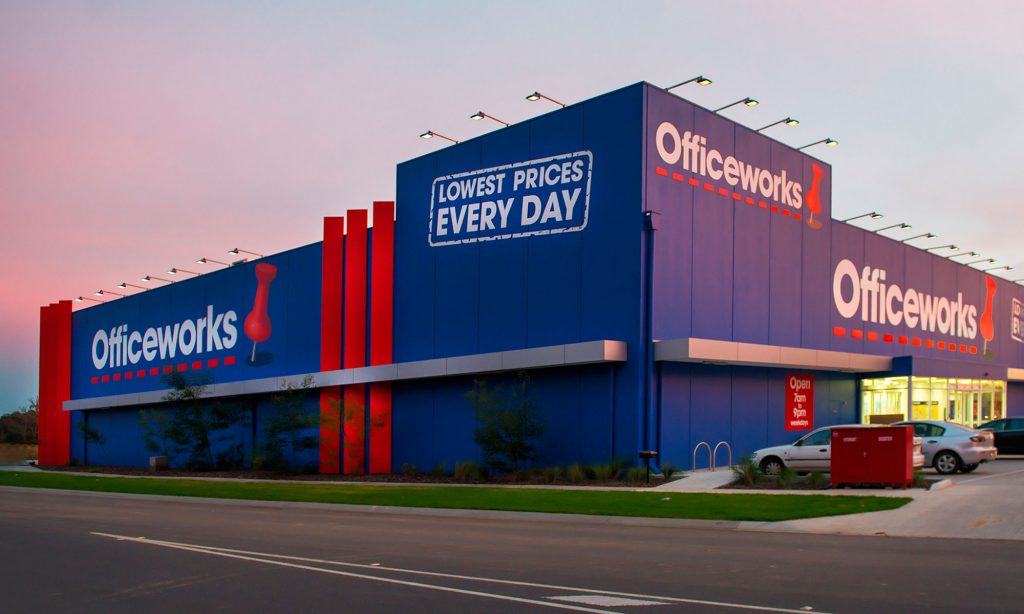
Ratings agency Fitch has warned that lending markets are deteriorating, with arrears exceeding pre-Covid levels.
The AFR has reported that the National Australia Bank is also charting a worsening of trading conditions, with its latest business confidence survey revealing another quarter of weakening growth.
Creditor Watch said its Business Risk Index was indicating the insolvency rate would increase from 4.18 per cent up to 5.8 per cent by the middle of 2024, above pre-pandemic levels.
creditor Watch chief executive Patrick Coghlan said the increase was a forward indicator of looming business failures, with the decline in access to finance as lenders pulled back from the market set to worsen the collapse.
“It is tough and getting tougher, and will remain tough for the foreseeable future, with small businesses going to have a difficult period ahead over the next 12 months,” he told The Australian. “Come February and March we will get a clearer picture on just how many businesses will survive because December and January are when a lot of retailers groups make their money, and if that doesn’t come through then many will have to pull the pin.”
creditor Watch data showed invoice values were also slumping, down 34 per cent in the 12 months to November to circa $160,000 in what the company said was a sign of a sharp decline in activity on the back of weaker demand.
Many retailers have taken to only ordering replacement stock.
The latest figures from the corporate regulator showed 907 companies entered insolvency in November, almost double the level recorded a year prior and well above long term averages.
The data showed insolvencies were already tracking well above levels recorded in the 2023 financial year.
NAB chief economist Alan Oster said confidence and conditions were now sliding “after a period of relative stability through mid-2023”.
“Outside of the pandemic period, business confidence is now its weakest since around 2012, when conditions were significantly weaker and growth in advanced economies was slowing,” he said.
“This month’s outcome suggests that growth in Q4 is unlikely to improve from the weak outcome in the Q3 national accounts, and while slower growth will eventually see an easing in inflation pressure, this will lag activity.”
Fitch also warned the lending market was deteriorating, with arrears in some segments now above pre-pandemic levels.
The ratings agency said defaults and arrears were set to rise on the back of unemployment and a high cash rate.
Fitch said it expected unemployment to lift to 4.2 per cent in 2024, up from 3.7 per cent recorded in October.
The agency said vulnerable borrowers, with high debt to income ratios or who were self-employed with irregular income, were particularly exposed to the worsening environment.