Meta’s New Muse AI Agent Can Send Emails, Make Payments & Shop
 Emma Wheaton
09 Sep 2026
Emma Wheaton
09 Sep 2026

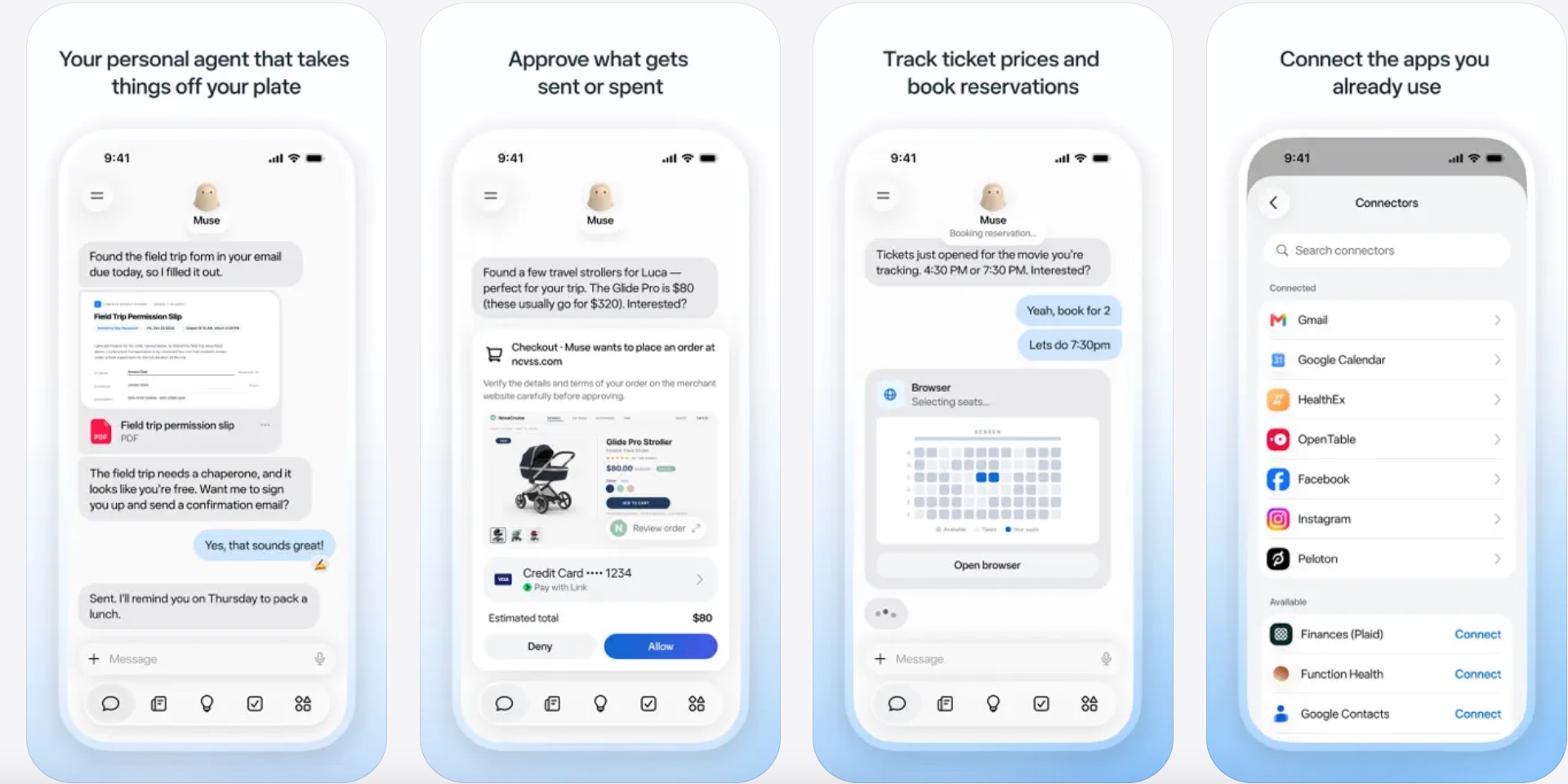
Meta has launched a new AI agent that can carry out tasks across connected apps, including sending emails, booking travel, making purchases and managing other activities on behalf of users.
Called Muse, the service is initially available to users aged 18 and over in the US via a dedicated app and WhatsApp with Meta saying it has plans to bring Muse to its smart glasses in the future.
Unlike conventional AI assistants that primarily respond to questions or generate content, Muse is designed to take action on a user’s behalf.
Meta says users can connect Muse to applications covering email, calendars, payments, health, shopping and smart-home functions. Users then choose which applications the agent can access, and can revoke those permissions.
The agent operates through a dedicated virtual machine that houses both the AI and the user’s data, which allows Muse to continue working on tasks in the background.
Meta says the system is designed to prevent Muse from directly accessing passwords and payment information. When it comes to purchases, it is designed to use a one-time virtual card through Stripe, ensuring a user’s underlying payment details are protected.
Meta has also developed a security system to monitor Muse’s actions and intervene when it detects potentially sensitive activity.
However, the launch comes amid concerns about the reliability and security of increasingly autonomous AI systems.
Reuters reports that Meta delayed the original launch after internal testing raised concerns about the agent’s handling of sensitive information. Employees involved in testing reportedly encountered security vulnerabilities, reliability problems and instances in which safeguards could be bypassed.
Meta has said it believes Muse has now reached the minimum safety threshold required for release, while acknowledging that the system can still make mistakes.
An encrypted version of Muse is planned for release later this year. Meta says it will provide additional protection for user data and conversations. Users can also opt out of having their interactions used to train Meta’s AI models.
The launch forms part of CEO Mark Zuckerberg’s broader push towards what Meta describes as “personal superintelligence”, with the company looking to turn its investment in AI infrastructure into consumer products and new revenue streams.
According to Reuters, a basic version of Muse will be available free and paid tiers will also be available, at a cost of US$20 or US$100 per month for heavier usage.
The development of Muse could have significant implications if AI agents become capable of researching products, comparing prices and completing transactions.
Meta has not yet announced an Australian launch date for Muse, with the agent currently limited to the US.