IFA 2026: ASUS Showcases RTX Spark-Powered ProArt PCs
 April Ossington
02 Sep 2026
April Ossington
02 Sep 2026
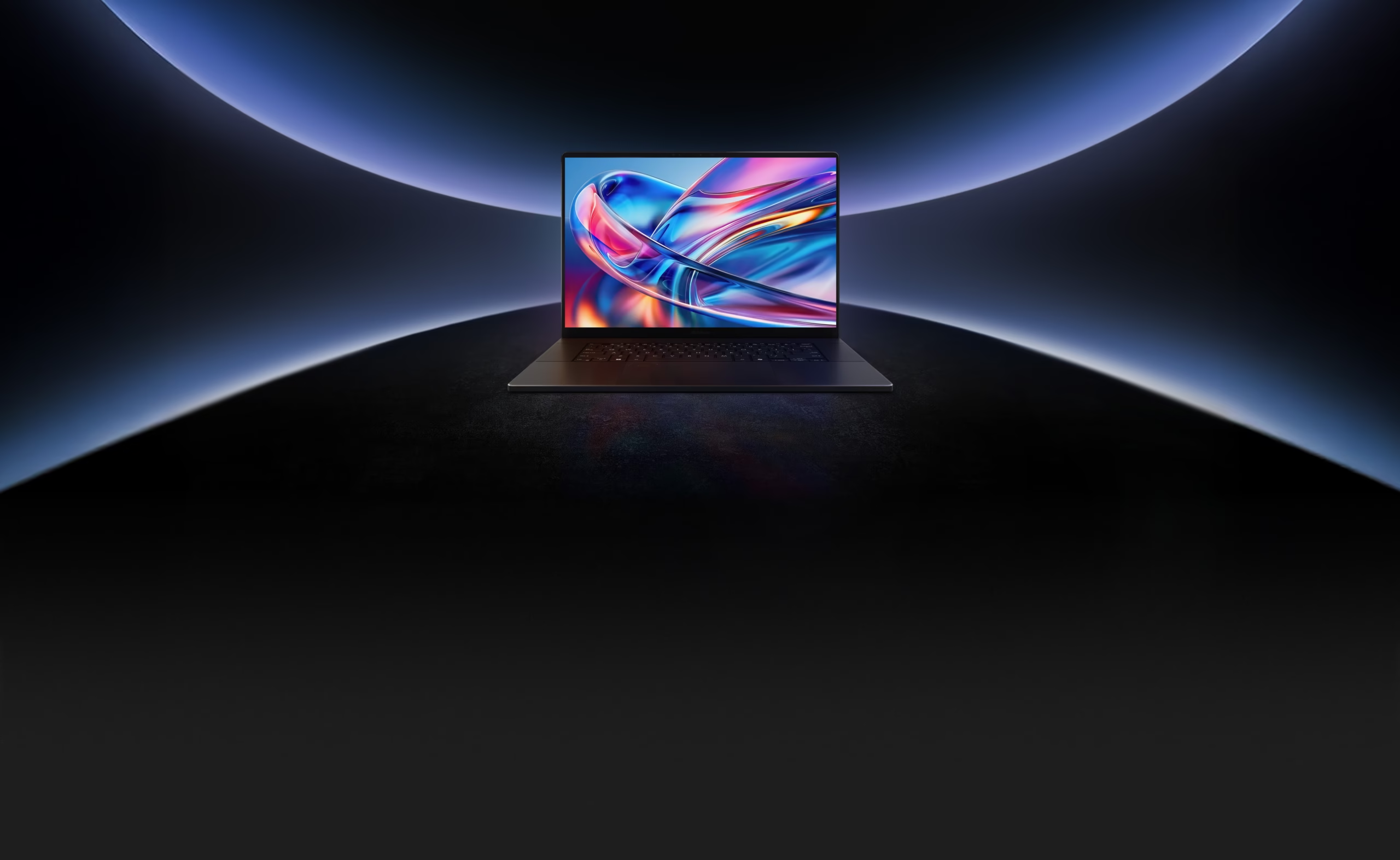
ASUS is using its IFA 2026 media showcase in Berlin to demonstrate its latest ProArt creator PCs, including the ProArt P16 and P14 laptops and the compact ProArt GR1X mini PC, all powered by NVIDIA’s new RTX Spark platform.
One important clarification is that the ProArt P16 and P14 were first announced at Computex in June, rather than being unveiled for the first time at IFA. The Berlin event is giving media and partners another opportunity to see the machines in action, with a particular focus on locally run AI and agent-based creative workflows.
ASUS is holding its dedicated IFA Media Showroom at the ABION Spreebogen Waterside Hotel in Berlin from 2 to 5 September, alongside the wider IFA 2026 event.
At the centre of the new ProArt range is NVIDIA RTX Spark, which combines a Blackwell RTX GPU with a Grace CPU and fifth-generation Tensor Cores. ASUS says configurations can deliver up to one petaflop of AI performance and support as much as 128GB of high-bandwidth unified memory.
That level of memory is designed to allow substantially larger AI workloads to run directly on the computer rather than relying entirely on cloud services.
ASUS says the platform can run large language models containing as many as 120 billion parameters, process 3D scenes exceeding 90GB and generate 4K AI video locally.
The company is positioning local AI as an alternative for creators who want greater control over their data and fewer ongoing cloud-computing costs. Running models on the device can also allow AI applications to continue working without an internet connection.
The ProArt P16 packages the technology into a 16-inch laptop measuring 12.9mm thick and weighing 1.77kg. ASUS says it is 14 per cent thinner and 9 per cent lighter than the previous generation ProArt P16.
It can be equipped with a 99Wh battery and a Lumina Pro OLED display offering up to 4K resolution, a 120Hz variable refresh rate and NVIDIA G-SYNC support.
The smaller ProArt P14 weighs 1.48kg and measures 13.9mm thick, making it the lightest ProArt laptop ASUS has produced to date. It includes a 90Wh battery and can be configured with a display offering up to 3K resolution.
Both laptops are available in Nano Black and Neo White finishes and feature haptic touchpads alongside a broader selection of physical connections intended to reduce reliance on adapters.
For desktop users, ASUS is also showing the ProArt GR1X mini PC.
Measuring 150 x 150 x 51mm, the compact computer brings the same RTX Spark platform to a system designed for continuous AI processing, content creation, 3D rendering and local AI development.
ASUS has equipped the GR1X with a dual-fan cooling system and support for 10Gb Ethernet, Wi-Fi 7 and Bluetooth 5.4. It can also drive up to four 4K displays.
The hardware is being demonstrated alongside ASUS software intended to take greater advantage of local AI.
MuseTree incorporates local image-generation models including FLUX and WAN, allowing creators to generate material without relying on cloud-based token allowances, while StoryCube uses AI to recognise scenes, organise media and manage creative assets.
ASUS is also demonstrating agent-based workflows involving its Zenni Claw AI system and the open-source ComfyUI platform, showing how AI agents could move between tasks such as generating, editing and organising content rather than operating as isolated applications.
The IFA showing reflects a wider shift across the PC industry towards running more demanding generative AI models directly on personal computers.
For Australian creators, photographers and video professionals, the more significant development will be whether systems with this level of local AI performance can reduce reliance on subscription-based cloud services while maintaining the portability expected from conventional creator laptops.
Australian pricing and availability for the new RTX Spark-powered ProArt models have not yet been confirmed.