German Premium TV Brand Loewe Shifts Strategy, Adopts Hisense VIDAA Platform For New TVs
 David Richards
12 Mar 2026
David Richards
12 Mar 2026

Premium German TV brand Loewe is shifting its smart-TV strategy toward Hisense’s VIDAA platform, with a new generation of TVs set to launch in 2026 running the operating system that is now being rebranded “V Home OS.”
The move marks a significant change for the luxury TV brand, which historically developed its own platforms and more recently relied on Samsung’s Tizen OS in several models.
At CES 2026, Hisense and the VIDAA team confirmed the smart-TV platform is undergoing a major rebrand and architectural update, with VIDAA being rebuilt as Home OS, a system that will power TVs from both Hisense and Loewe going forward.
Hisense management who use the VIDAA platform in Australia instead of the Google TV platform used by Hisense USA claim that they are now the #1 TV brand in Australia, a claim that Samsung has challenged.
At CES Hisense engineers claimed the platform’s lightweight Linux-based architecture and low hardware cost make it attractive for TV manufacturers looking to deliver smart-TV functionality without the processing overhead of rival platforms.
The system, first introduced in 2014, has steadily expanded as Hisense licensed the technology to other TV brands.
Strategic Platform Shift
Loewe’s adoption of the VIDAA platform has generated discussion across the AV industry because it signals a clear shift in the company’s smart-TV platform strategy and while the Company is staying with the Tizen OS for their premium Stellar range they are using the new Hisense OS for their affordable premium TVs.
The company is currently operating a dual operating system approach, deploying both Samsung’s Tizen OS and Hisense’s VIDAA platform across different models.
Historically Loewe built its own proprietary software platforms, including Loewe OS7, but in recent years the company has increasingly turned to external operating systems.
Several of the brand’s latest premium TVs including Stellar and Inspire models still run Samsung’s Tizen OS, however Loewe executives at CES indicated the move toward the Hisense platform is being driven by features and capabilities not available in the Tizen variants used in Loewe TVs.
Industry observers say the move also reflects the growing influence of Hisense’s software ecosystem, which has rapidly expanded across multiple TV brands.
New TVs Launching With VIDAA Platform
The new Loewe TVs combining the Hisense OS platform with the company’s signature European industrial design and premium materials are set to arrive in 2026.
Leading the new range in 2026 from Loewe is the Stellar MLA+ OLED series, available in sizes from 42 inches to 97 inches, these models will continue to use the Samsung OS.
The flagship OLED models feature:
MLA+ OLED panel technology
Concrete rear panels
Four HDMI 2.1 ports
Premium German-engineered construction
Alongside the high-end OLED lineup, Loewe is also expanding its LCD offering with the introduction of the Vega 4K LED series, targeting smaller living spaces and apartment living.
The Vega series will be available in 32-inch and 43-inch models.
The 43-inch model features a 120Hz VA LCD panel, while the 32-inch version uses a 60Hz panel.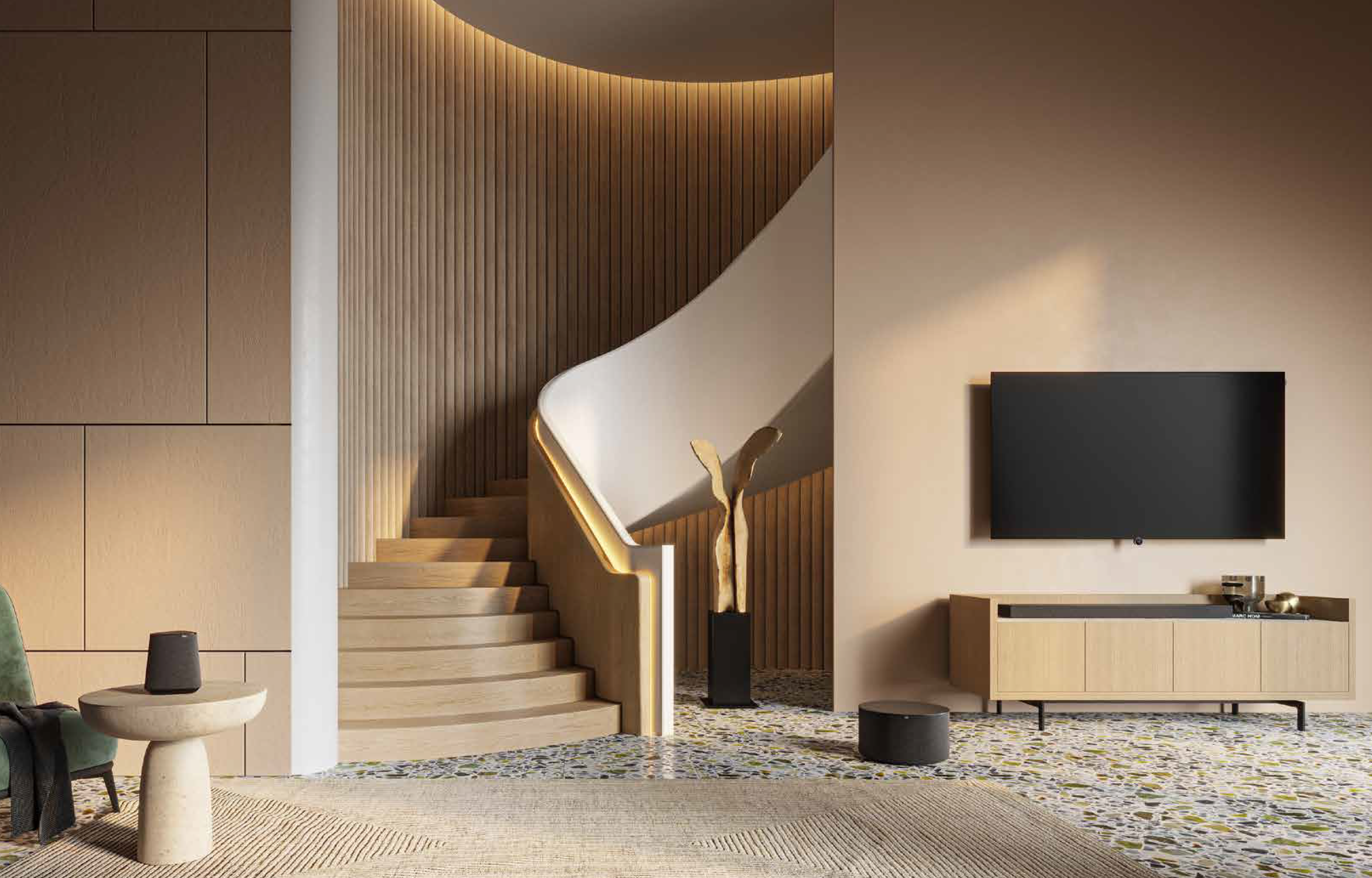
The TVs also feature significant local dimming capability, with:
260 dimming zones in the 32-inch model
390 zones in the 43-inch model
Both models support HDR formats including Dolby Vision, with Loewe claiming strong brightness, contrast and colour performance.
Built-In Dolby Atmos Sound
Unlike many TVs in the category, the new Loewe Vega models also integrate a Dolby Atmos soundbar delivering 60 watts of Class-D amplification.
Connectivity includes:
HDMI eARC
Bluetooth
Multiple HDMI inputs
For users wanting to connect their own sound systems, the HDMI eARC connection enables integration with external soundbars or AV receivers.
Premium Design Focus
Design continues to be a major differentiator for the German brand.
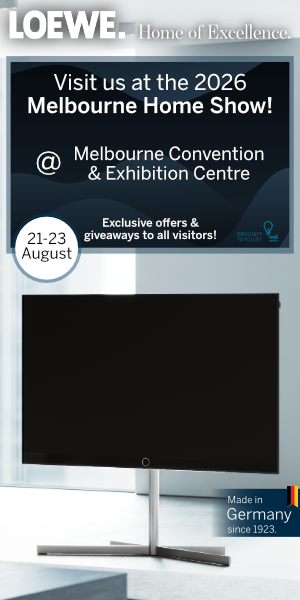
The new TVs feature aluminium frames and rotatable metal table stands with chrome finishes, reflecting Loewe’s focus on high-end materials and European industrial design.
Retailers say the strategy allows them to offer a premium TV alternative outside the dominant global brands, including Samsung, LG, Sony, TCL and Hisense.