China’s OLED Surge Threatens South Korea’s Display Dominance as Price War Looms OZ Retailers Set To Benefit
 David Richards
27 Mar 2026
David Richards
27 Mar 2026
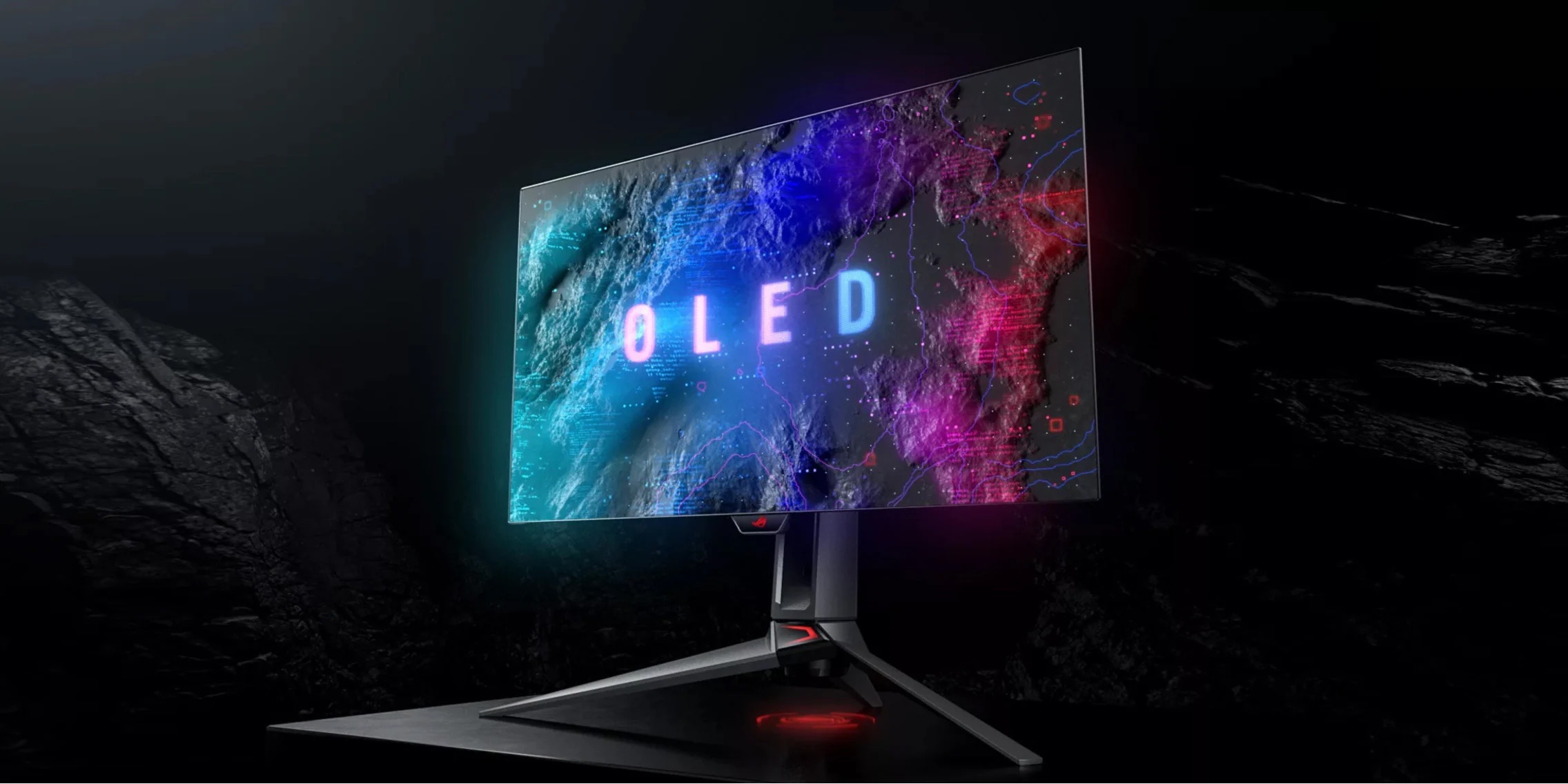
A new battleground is emerging in the global display industry, and this time it’s not televisions driving the fight—it’s laptops and monitors. As Australian retailers pivot toward OLED notebooks and next-generation displays to fuel growth, a deeper, more consequential conflict is unfolding: China is accelerating toward dominance in OLED manufacturing, putting South Korea’s long-held leadership under mounting pressure.
For years, companies like LG Electronics and Samsung Display defined the OLED era. But that dominance is now under threat. Chinese manufacturers are rapidly scaling production and are on track to overtake South Korea in OLED capacity by 2029—a shift that could trigger a sharp drop in prices and redraw the global supply chain.
According to Counterpoint Research, Chinese panel makers are pouring billions into advanced production, including cutting-edge 8.7-generation fabs. The pace of expansion is closing the gap with Korean rivals far faster than expected.
“Korea holds strong capacity across mobile, IT and TV segments, but expansion investments remain relatively conservative compared to China,” said Lee Jae-ho, senior analyst at Counterpoint. “If China continues to scale aggressively, technological advantages alone may not be enough to sustain leadership.”
That warning echoes a familiar pattern. The LCD market—once dominated by South Korea—was effectively captured by China through sheer scale and aggressive pricing. Now, history appears to be repeating itself.
Chinese firms, heavily backed by government subsidies, are prioritising market share over profitability. Companies like Visionox and Everdisplay are operating at losses—posting cost-of-sales ratios above 100%—as they flood the market with cheaper panels. The strategy is clear: dominate first, profit later.
In contrast, South Korean players are constrained by profit-driven models. Samsung Display and LG Display are focusing on efficiency, yield improvements, and technological refinement. But that discipline may come at a cost in a market where scale increasingly dictates pricing power.
“The difference is structural,” said one industry source. “Chinese OLED makers are expanding with state support, while Korean firms have to fund growth through earnings. That limits how aggressively they can compete on volume.”
The consequences are already visible. LG Display, once a powerhouse in LCD manufacturing, was forced to sell its plants to Chinese giant TCL—who now supplies panels back to its former rival.
Meanwhile, LG Electronics is fighting to defend its OLED position. The company has begun cutting prices on OLED TVs and promoting new anti-reflection technologies to maintain differentiation. But even as it innovates, the ground is shifting beneath it.
As supply expands, prices inevitably fall. That dynamic—already seen in LCD—is now threatening OLED. And with Chinese-made RGB LED panels improving rapidly, even OLED’s quality advantage is being challenged in key markets like Australia.
The stakes are enormous. If OLED follows the same trajectory as LCD, the industry could shift from a technology-driven race to a scale-driven price war—one that overwhelmingly favours China.
For now, South Korea still holds the technological edge. But with China accelerating capacity and reshaping supply dynamics, the question is no longer if the balance will shift—but when.