Anker Wants You To Trust A New Chinese Developed AI PLatform That Links Products Such As Eufy
 David Richards
04 Jun 2026
David Richards
04 Jun 2026
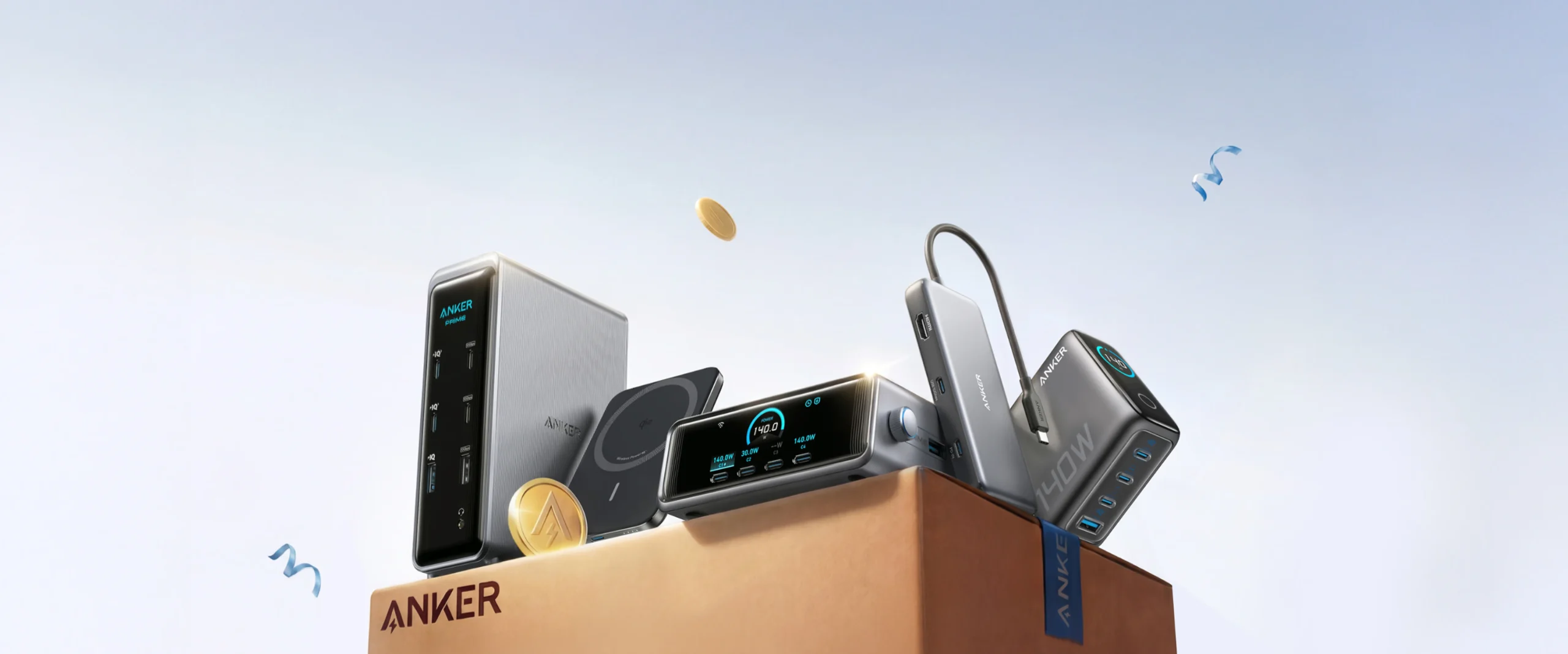
Chinese consumer electronics company Anker who sell the Eufy range of products in Australia, has unveiled a new AI-driven ecosystem concept which when implemented fully links its audio, security, entertainment and power products through a proprietary Chinese chip platform and software architecture, marking a significant shift in the company’s product strategy.
The announcement was made at the company’s Anker Day event in New York, where executives outlined plans to integrate artificial intelligence across multiple product categories using the company’s Chinese developed Thus AI chip platform and VibeOS software.
Anker recently established its own Australian subsidiary after ending its distribution and marketing relationship with Directed Electronics, which previously managed sales of its products in Australia.
Company executives said the new strategy focuses on creating interconnected devices capable of local AI processing rather than relying heavily on cloud-based services.
“The next era will be very different,” said Jackie Jia, Anker’s chief marketing officer. “In the future, AI will run on the device itself. Devices will think, plan, and act together like a nervous system distributed throughout the home.”
Earlier this year, Anker introduced Thus, its proprietary AI chip platform designed to enable local processing in products including Eufy security cameras and robotic vacuum cleaners.
At the New York event, Anker launched the first consumer products powered by the chip, including the Soundcore Liberty 5 Pro and Liberty 5 Pro Max wireless earbuds.
According to the company, the earbuds use a neural-network AI model and a 10-sensor array to improve voice isolation and call quality in noisy environments. The devices also feature active noise cancellation, AI-based sound enhancement, personalised equalisation settings and faster voice-command processing.
“The neural network on the Thus chip isolates your voice from background noise in real time,” said Andy Fucha, Anker’s global marketing lead for Soundcore earbuds.
The company said the Liberty 5 Pro recently received Guinness World Records certification for what it described as the highest objective speech-quality score recorded for true wireless earbuds.
Anker also introduced EdgeAgent, a new AI-powered platform for its Eufy Security division. The company described the technology as a local AI security agent designed to identify potential threats before incidents occur.
The system combines dual-radar sensing and on-device AI processing to analyse activity around a property and reduce false alarms, according to the company.
“People want proactive defence,” said Brett White, global PR lead for Eufy Security. “They want their security solution to see a threat as it approaches their home and then respond before that threat can do any damage.”
Anker said EdgeAgent can process events locally in as little as three seconds and reduce false alarms to approximately five per cent without requiring cloud-storage subscriptions.
The company’s push toward local AI comes as its Eufy security brand continues to face scrutiny over privacy and data handling practices.
Since late 2022, security researchers and privacy advocates have raised concerns about Eufy cameras after reports that some devices transmitted user data to cloud servers despite being marketed as local-storage products. Researchers also reported instances where thumbnail images, facial-recognition data and other information were uploaded to cloud infrastructure even when cloud storage was disabled.
Separate findings suggested that under certain conditions live camera feeds could be accessed through web links and viewed using common media players. Eufy initially disputed some of the claims before later acknowledging that aspects of its system were not end-to-end encrypted as previously advertised.
The privacy concerns prompted regulatory attention in several markets.
Anker did not provide detailed information at the event regarding data-storage practices, data-sharing policies or how information generated by its expanding AI ecosystem will be managed.
Executives indicated that the technologies demonstrated at the event point toward a future in which AI assistants and connected devices interact through gesture-based and spatial interfaces rather than traditional screens.
The company’s push toward AI-enabled security comes as its Eufy brand continues to face questions over privacy and security practices.
Between 2022 and 2025, Eufy was the subject of widespread criticism from security researchers after reports that some cameras transmitted data to cloud servers despite being marketed as local-storage devices. Researchers also reported that thumbnail images, facial-recognition data and other information were uploaded to cloud infrastructure even when users believed cloud services had been disabled.
Separate investigations found that under certain conditions live camera streams could be accessed through web links and viewed using standard media software. Eufy initially disputed aspects of the findings before later acknowledging that elements of its implementation were not end-to-end encrypted as previously advertised.
The issues prompted regulatory scrutiny in several markets and raised broader questions about data handling, privacy protections and security practices among connected-device manufacturers.